




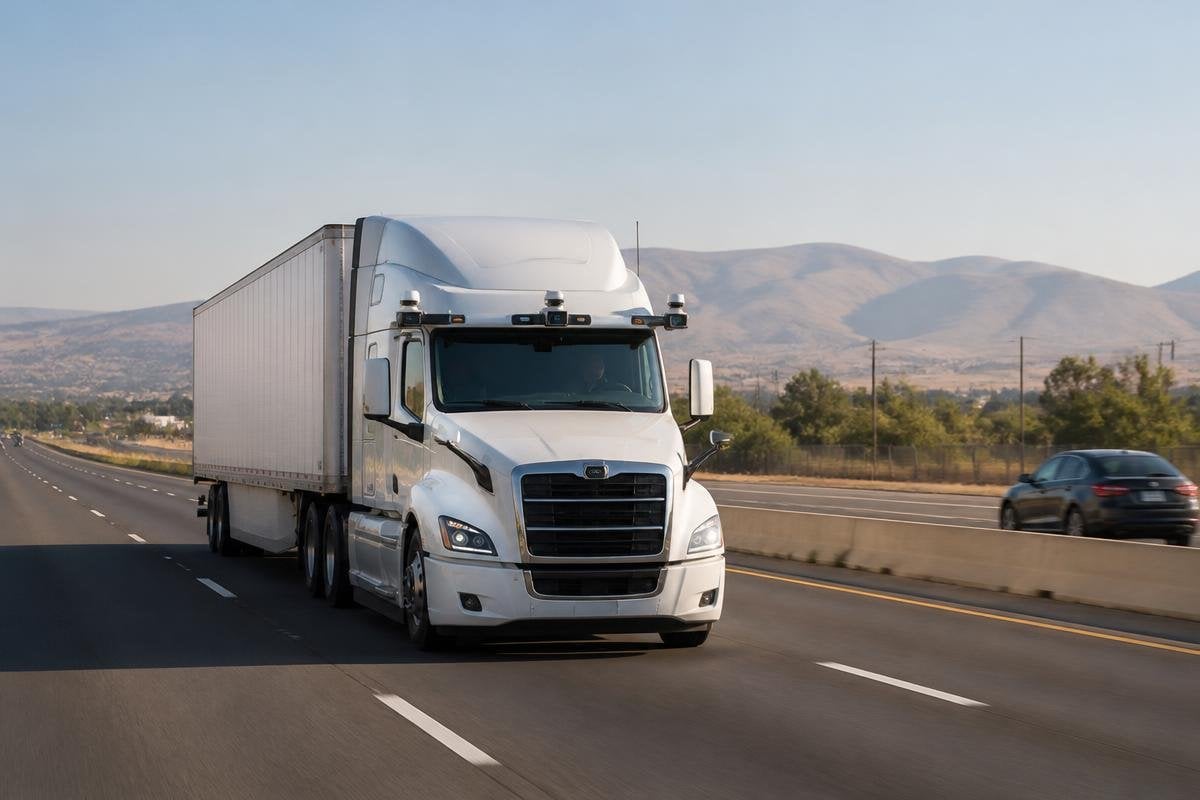
A truck can steer, brake, and keep its place on a road without a person holding the wheel. That still leaves hard questions about loading yards, bad weather, repairs, legal responsibility, and the last part of a delivery.
Quick read
- Driver work may shift from highway driving to yards, handoffs, checks, and remote support.
- A truck that works on a mapped route still needs help when road conditions change.
- Fleet owners will weigh labor savings against equipment cost, safety rules, downtime, and public trust.
What the truck can do
Self-driving trucks use cameras, radar, LiDAR, maps, and onboard software to read the road. The system turns those sensor readings into choices about speed, lane position, braking, and following distance.
That work suits long highway routes. Roads are easier to map than a busy loading yard, and highway traffic tends to follow clearer patterns. A truck can also keep watch for long periods without the fatigue that affects a human driver.
The hard part starts when the planned route meets an unplanned event. A stopped vehicle may block a lane. Road crews may move barriers overnight. Rain, snow, glare, or a dirty sensor can reduce what the system can see. The truck needs a safe response for each case, not a smooth demonstration on a known road.
Many systems also depend on a remote support team. A person may review an alert, guide the truck through a difficult spot, or call for help when the software cannot make a safe choice. That person may support several trucks, but the work still needs training and clear rules.
What happens to the driver’s job
The first change may come through a split job. A driver could take a truck from a depot to a highway route, then another worker could take control near the destination. That keeps people close to the parts of the trip where roads, sites, and customers vary most.
Drivers may also move into yard work, vehicle checks, load checks, customer handoffs, or recovery work after a system stop. Those tasks need road knowledge and judgment, even when the truck handles the steady part of the route.
A truck trial needs more than miles driven. Reports from Robot 24 can add the route, safety setup, and work done around each vehicle, which helps you judge how much human support the system still needs.
The number of people needed for each truck could fall if one remote operator can support several vehicles. That change would affect hiring before fully driverless trucks become common. Training may shift toward software alerts, safety procedures, sensor checks, and remote operations.
I’d plan for fewer miles driven by people, not for drivers to vanish from freight work.
The limits fleet owners have to price
A fleet cannot judge the system by highway motion alone. It needs to measure how often the truck stops, how long support takes, how it handles road work, and what happens after a sensor fault.
The cost also reaches beyond the truck. A company may need new depot layouts, service tools, remote operations staff, stronger network links, and a process for sending a human team to a stopped vehicle. Insurance and local rules may add more conditions.
Responsibility is another open issue. If software makes a bad choice, the fleet, vehicle maker, software supplier, and human support team may each have a role in the review. Clear records from the truck will matter after a crash or near miss.
Public acceptance will shape deployment too. People sharing the road need to know how the truck signals a stop, handles an emergency, and responds when someone cuts in front of it. A system that works technically can still face delays if people do not accept its behavior.
A practical check before buying into the shift
Use these questions when judging a self-driving truck plan:
- Route fit: Which roads can the truck handle without human control?
- Weather limits: What conditions force a stop or handoff?
- Remote help: How many vehicles can one trained operator support?
- Recovery plan: Who reaches the truck after a fault, crash, or blocked route?
- Job design: Which driver tasks move to yards, support desks, or recovery teams?
- Proof: Are the results from normal service, or from a short controlled trial?
The last question matters because a truck can complete a planned route and still need frequent human help. A useful trial records every stop and handoff, then compares that work with the labor and delay costs of a normal run.
Self-driving trucks may take over parts of driving before they take over the whole job. The next measure that matters is not how far a truck travels alone, but how much human work remains around each completed delivery.